Low-Voltage Systems for Snow Melting
Our patented low-voltage radiant heating mat STEP Snowmelt is a durable, yet thin (3/64") element. These polymer mats come in different widths and are made of a homogeneous, semi-conductive polymer, which by nature is self-regulating.
At a Glance: Low-Voltage Systems for Snow Melting
- STEP Snowmelt uses self-regulating PTC nano-technology that automatically adjusts heat output based on temperature, helping reduce energy consumption by 30% to 60% compared to conventional cable systems.
- The low-voltage polymer heating mats are thin, durable, and flexible, making them suitable for snow melting, roof deicing, and radiant floor heating applications.
- Operating through a transformer at low voltage, the system can be used in applications where electrical service capacity is limited while providing even heat distribution across the heated surface.
This technology (PTC nano-technology) allows the heating elements to heat with maximum power in cold environments and use less electricity as they warm up. This minimizes power consumption and reduces your snow melt or heating costs by 30-60% compared to conventional cable systems, and it comes with a 20-year limited warranty. This system uses a step-down transformer in line with the system to convert the input line voltage power low-voltage so it can operate on up to 277V, with no more than 65V running through the polymer mat.
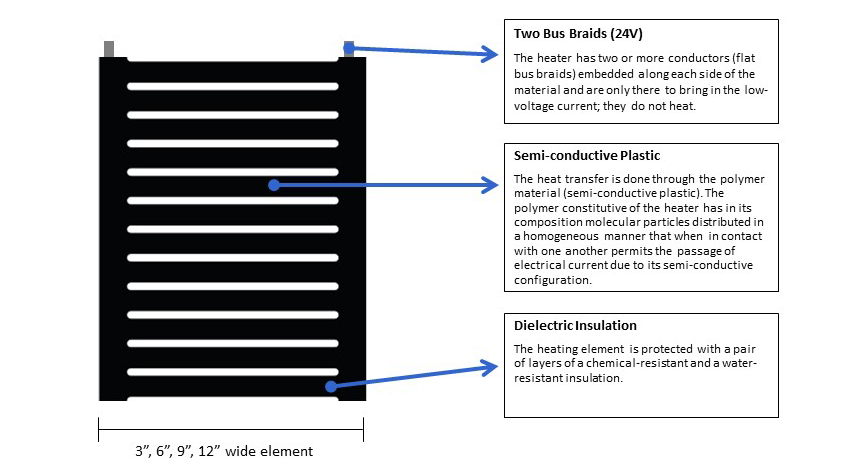
STEP Warmfloor operates on 24V, cutting your energy consumption in half when compared to other electric radiant systems. Because the system operates off of 24V, this is very helpful in older homes which don't have enough power (amperage) in their service for traditional radiant systems. It is also very durable and can be walked on during installation, and the plastic can be nailed or stapled through with no effect, provided the conductive flat bus braids running along either side are not damaged.
These systems can be used for:
- Class I (snow free ratio 0): Designed not to melt snow while it is falling, but afterwards
- Class II (snow free ratio 0.5): 50% of snow is melted while falling, the rest afterwards
- Class III (snow free ratio 1): All snow and ice is melted while falling
STEP Warmfloor is certified by Greener Product, which confirms the product complies with the LEED, LEED for Homes, and NAHB standards and may earn credits that contribute to certification under green building rating systems, such as LEED, LEED for Homes and NAHB.
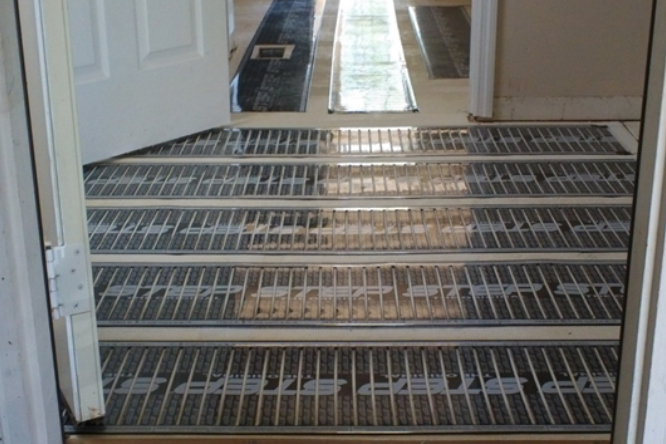
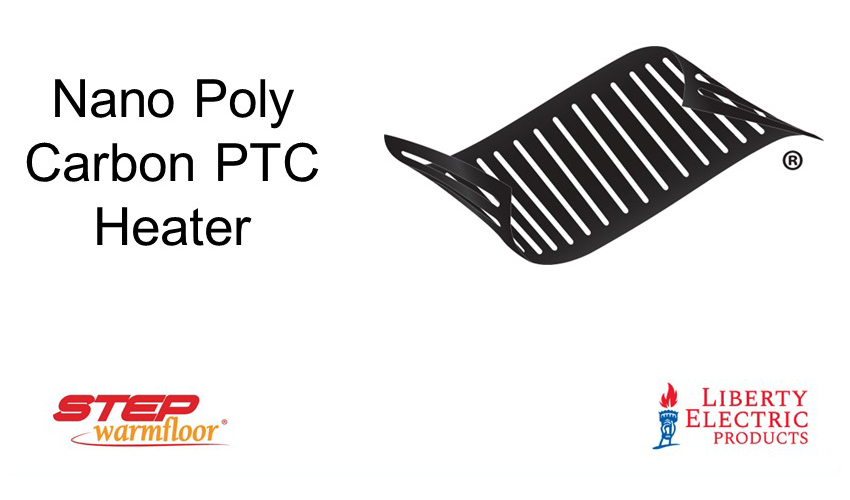
The PTC heater is a homogeneous, flat, thin, strong, flexible mat made of a unique polymer blend that heats when electricity passes through it:
Roof and Gutter Deicing
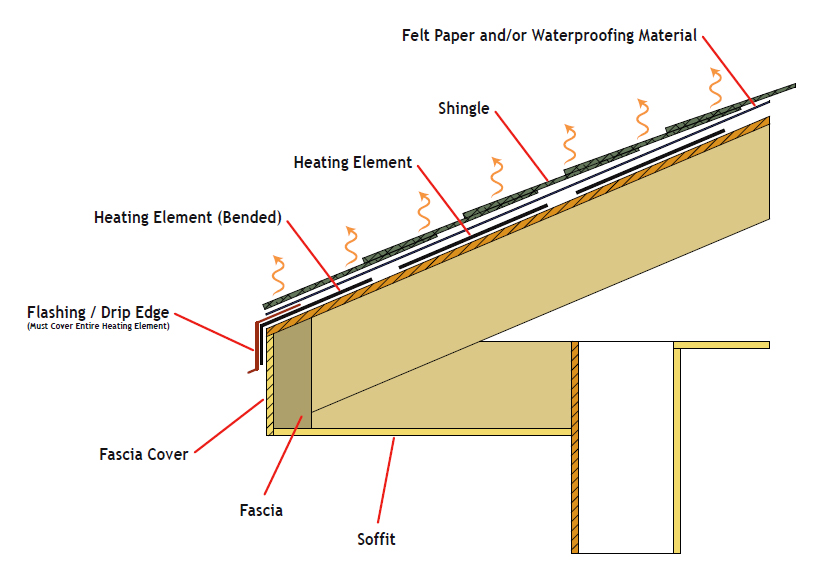
Low-voltage flat PTC heating mat designed to be installed underneath the roof shingles, so there is no need for the V shape wire hanging from your roof. The heating elements are protected by a dielectric insulation so the heating element can be installed under all types of roofing material, including metal roofs along with being delivered in a roll so that they can be cut to size and field wired on the job site for easy installation.
Compatible with shingle and metal roofs with a 10-year warranty, they are available for 120, 208, or 240 volt systems, and the elements will not be affected if they are stapled or cut through. In addition, the material is flexible so that it can be bent around the soffit to ensure that the snow and ice doesn't built up at the junction of the roof and the gutter per below.
Driveway/Sidewalk/Stair Snow Melting
The patented low-voltage radiant heating mat STEP Snowmelt is a durable and thin element made of a homogeneous, semi-conductive polymer. This self-regulating technology (PTC nano-technology) allows the heating elements to heat with maximum power in cold environments and use less electricity as they warm up. This minimizes power consumption and reduces your snow melt costs by 30-60% compared to conventional cable systems, and it can also be run on solar or wind power.
STEP Snowmelt is designed to melt snow and ice on entrances, walkways, driveways, ramps, patios, etc. The snow melt system eliminates shoveling snow and protects pedestrians from slippery ice- or snow-covered driveways and sidewalks. The controller made specifically for this system can be used in snowmelt mode, which is when the thermostat is being used to control the elements as the external temperature sensor installed in the concrete or on the roof reads the ambient temperature, and the set temperature is adjustable between 32°-41°F/0°-5°C.
Key benefits with STEP Snowmelt:
- STEP Snowmelt provides an even, low temperature over a larger surface avoiding expansion and contraction in the concrete
- Cables crack the concrete due to difference of temperature
- STEP Snowmelt can cross expansion joints (cables cannot)
- Save costs with STEP Snowmelt
- Cables need to install 2.5 times more power
Floor Heating
STEP Warmfloor is approved for use with any non-conductive floor covering including natural stone, ceramic and porcelain tiles, hardwood and laminates, and carpet.
More efficient heat distribution: When installed, the 12" wide elements cover more than 60% of the floor, thereby warming evenly the floor with a lower temperature.
Elements run at a low even temperature: With a reduced operating temperature there is less heat loss to the ground.
Elements act like a floor sensor: The STEP Warmfloor radiant heating element is self-regulating, which means that when the ambient temperature increases, the electrical resistance increases, and the consumption of electricity decreases.
Heat where and when you want: With Step Warmfloor thermostats you can individually zone every room and/or use the programmable thermostat to adjust the temperature to your specific needs.
Install directly under the floor cover: STEP Warmfloor low-voltage system can be placed safely closer to the floor surface than any other heating system.
View the Nano Poly Carbon PTC Heater Presentation
Download the Nano Poly Carbon PTC Heater PDF Presentation
Design Services
Let us work with you or your contractor to design the system that fits your specific application perfectly. Contact us today for more information.
Frequently Asked Questions
Quick Links
What makes STEP Snowmelt different from traditional snow melting cable systems?
STEP Snowmelt utilizes a homogeneous semi-conductive polymer heating element rather than conventional heating cables. The self-regulating PTC technology allows the mat to provide maximum heat output in colder conditions and automatically reduce power consumption as temperatures increase. This helps improve energy efficiency while maintaining effective snow and ice melting performance. The system can reduce operating costs compared to many traditional constant-output cable systems.
Where can low-voltage STEP Snowmelt systems be installed?
These systems are designed for a wide range of applications including driveways, sidewalks, walkways, ramps, patios, entrances, stairways, roofs, and gutters. The flexible polymer mats can be adapted to various layouts and construction types. Roof and gutter deicing applications can be installed beneath roofing materials to provide a less visible solution than exposed heating cables. The technology is suitable for both residential and commercial projects.
How does the low-voltage design benefit homeowners and facility operators?
The system operates through a step-down transformer, allowing the heating elements to run at a low voltage while supplying heat across large areas. This can be especially beneficial for older buildings that may have limited available electrical capacity. The low-voltage design also contributes to installation flexibility and energy-efficient operation. Because the polymer heating material self-regulates, energy use decreases as the heated surface warms.
What advantages does STEP Snowmelt provide for concrete snow melting applications?
STEP Snowmelt delivers even heat across a larger surface area, helping minimize temperature variations within the concrete. This more uniform heating can reduce expansion and contraction stresses that may occur with concentrated heating methods. The system can also cross expansion joints, providing additional design flexibility. Its self-regulating operation helps maintain effective snow melting performance while reducing overall power requirements.
Can the same technology be used for indoor radiant floor heating?
Yes. STEP Warmfloor uses the same low-voltage, self-regulating technology for indoor radiant heating applications. It is approved for use beneath many non-conductive flooring materials, including tile, stone, hardwood, laminate, and carpet. The wide heating elements cover a significant portion of the floor area, helping create even heat distribution throughout the room. Individual room zoning and programmable controls can also be incorporated to improve comfort and energy efficiency.