Fire Sprinkler Freeze Protection
When the water in a wet pipe fire sprinkler system freezes, it typically expands 10%or more. This can cause blockages in the pipe and in some instances, cause pipes to crack or burst. To prevent this avoidable event from occurring, NFPA 13 2019 version permits the use of energy efficient electric heat trace to be used with an insulated and weatherproof jacket so that the sprinkler pipe is maintained at or above the required 40°F.
At a Glance: Fire Sprinkler Freeze Protection
- NFPA 13 (2019) permits listed electric heat trace systems as an alternative freeze protection method for wet fire sprinkler piping when temperatures cannot be reliably maintained above 40°F.
- Certified systems combine self-regulating heating cable, thermal insulation, and monitored controls to maintain safe operating temperatures and provide required system supervision.
- Heat trace freeze protection helps safeguard water-filled sprinkler piping in cold environments such as parking garages, loading docks, atriums, and other areas exposed to freezing temperatures.
The electric heat trace systems for fire sprinkler freeze protection that we design, and supply are listed and approved. The approval is for the latest NFPA 13, IEEE 515.1 and UL 515A for installation of heat cable on wet fire sprinkler piping. The excerpt from the NFPA 2019 regulations that pertains specifically to freeze protection is listed below.
NFPA 13 2019 Regulation Regarding Fire Sprinkler Freeze Protection
16.4.1 Where any portion of a system is subject to freezing and the temperatures cannot be reliably maintained at or above 40°F(4°C), the system shall be installed as a dry pipe or preaction system
16.4.1.1.1 The requirements of 16.4.1.1 shall not apply where alternate methods of freeze prevention are provided in accordance with one of the methods described in 16.4.1.2 through 16.4.1.4.1.
16.4.1.2 Unheated areas shall be permitted to be protected by antifreeze systems or by other systems specifically listed for the purpose.
16.4.1.3 Where aboveground water-filled supply pipes, risers, system risers, or feed mains pass through open areas, cold rooms, passageways, or other areas exposed to temperatures below 40°F (4°C), the pipe shall be permitted to be protected against freezing by insulating coverings, frost proof casings, or other means of maintaining a minimum temperature between 40°F and 120°F (4°C and 49°C)
16.4.1.4 Listed heat-tracing systems shall be permitted in accordance with 16.4.1.4.1 and 16.4.1.4.2.
16.4.1.4.1 Where used to protect branch lines, the heat-tracing system shall be specifically listed for use on branch lines
16.4.1.4.2 Electric supervision of the heat-tracing system shall provide positive confirmation that the circuit is energized
16.4.1.5 Water-filled piping shall be permitted to be installed in areas where the temperature is less than 40°F (4°C) when heat loss calculations performed by a professional engineer verify that the system will not freeze.
The full list of NFPA codes and standards can be found at NFPA.org.
Key System Requirements
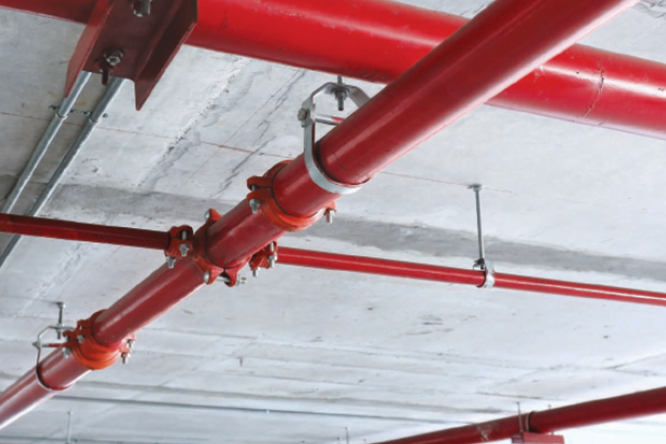
The systems for freeze protection of fire sprinkler piping are certified for use on ground water-filled supply pipes, main standpipes, risers, system risers, branch lines, or other areas exposed to temperatures below 40°F.In order to be listed, the systems must include the following key items:
Insulation
Electric heat trace systems must be combined with thermal insulation to limit heat loss in the system to provide the most energy efficient temperature maintenance. IEEE 515.1 has very clear instructions for insulation requirements for fire sprinkler systems.
Controls That Can Communicate
IEEE 515.1 also has very specific control requirements for pipe freeze protection systems that cover everything from backup power contact or types to being permanently connected to the power supply. The most unique aspect of this requirements is its ability to provide audible/visual alarms along with being able to communicate with the fire alarm control panel.
The ITC-FS Series Intellitrace Controller from Chromalox is one of the very few on the market that meets all of the most current requirements and have passed the extensive testing of the UL515A standard.
Self-Regulating Heating Cable
Being one of the industry leaders in heat trace products, Chromalox has the widest array of self-regulating heat trace. Self-regulating heat trace is used in these applications because it will efficiently self-adjust its heat output to changes in pipe temperature along the entire length of the line. The SRF cable is available in 3, 5, 8, and 10 w/ft and in 120V or 208-277V. This gives us the flexibility to design the most cost-effective system to install and operate for our customers.
Frequently Asked Questions
Quick Links
Why do fire sprinkler systems need freeze protection?
Wet pipe fire sprinkler systems contain water that can freeze when temperatures fall below 40°F. As water freezes, it expands and can obstruct flow, damage fittings, or cause pipes to crack or burst. Freeze protection helps ensure the system remains operational and ready to deliver water during a fire event. Maintaining proper pipe temperature is essential for both system reliability and code compliance.
Does NFPA 13 allow electric heat tracing on fire sprinkler piping?
Yes. NFPA 13 (2019) permits the use of listed heat-tracing systems as an approved method of freeze prevention in specific applications. The standard allows heat tracing when installed in accordance with applicable requirements, including system listing, temperature maintenance, and electrical supervision. Branch line applications must use systems specifically listed for that purpose. Proper design and installation are necessary to meet all code requirements.
Why is insulation required with a heat trace system?
Insulation is a critical component because it reduces heat loss from the sprinkler piping. Without adequate insulation, the heating cable would need to work harder to maintain the required pipe temperature, increasing energy consumption and reducing system efficiency. IEEE 515.1 includes specific insulation requirements for fire sprinkler freeze protection systems. The combination of heat tracing and insulation provides the most effective temperature maintenance strategy.
What type of heating cable is used for fire sprinkler freeze protection?
Self-regulating heating cable is commonly used because it automatically adjusts heat output based on pipe temperature conditions. As temperatures decrease, the cable produces more heat, and as temperatures increase, output is reduced. This allows more efficient operation while helping maintain consistent freeze protection throughout the piping system. Multiple wattage and voltage options are available to accommodate different project requirements.
What control and monitoring features are required for these systems?
Codes and standards require electrical supervision to confirm that the heat-tracing circuit remains energized. Modern controllers can provide audible and visual alarms and may be capable of communicating directly with a fire alarm control panel. Some systems also support backup power monitoring and advanced diagnostics. These features help facility personnel quickly identify and respond to system issues before freeze damage occurs.
Let Us Help Design a System for Your Needs
At LEP & NEES, we have over 35 years of designing systems for pipe freeze protection of sprinkler systems. Being in the Northeast, it is key that these systems are designed to be able to withstand the harsh cold environments in everything from parking garages, loading docks, atriums, and many other applications.
Please contact us directly and one of our sales engineers can visit a job site or review your drawings to get a project started.