Heavy Duty Gas Tube Infrared Heaters
Gas tube infrared systems combust gas within the tube, creating heat that is partly projected towards the ground, and partly reflected into the shield, which is then redirected towards the ground. Gas tube infrareds can heat small or large areas and high ceiling applications more effectively than forced air systems and are a popular choice regarding costs and the potential amperage limitations of electric infrared systems.
At a Glance: Heavy Duty Gas Tube Infrared Heaters
- Gas tube infrared heaters provide highly efficient, directional heating by warming people, equipment, and floors directly instead of heating large volumes of air.
- Ideal for warehouses, aircraft hangars, service centers, agricultural facilities, restaurants, sports venues, and other high-ceiling or draft-prone spaces where forced-air systems are less effective.
- Available in single-stage, two-stage, modulating, high-intensity, and architectural outdoor designs to balance energy efficiency, comfort, installation requirements, and operating costs.
Infrared heaters have several advantages over other heating options, including:
- No air movement, no dust getting circulated.
- Heat objects from the ground up, reducing air stratification.
- Quiet; with electric radiant there are no moving parts.
- Comfort recovery is faster in areas where doors are opened frequently.
- Based upon the reflector system a heater can reflect virtually 100% of the energy away from the emitter tube.
Types of Gas Tube Infrared Heater Products
Two Stage Infrared
High-efficiency, two-stage infrared tube heaters deliver exceptional performance with thermal efficiencies up to 93% (HHV gross) through the use polypropylene flue. In addition, the canopied reflector system provides the highest radiant output in the market.
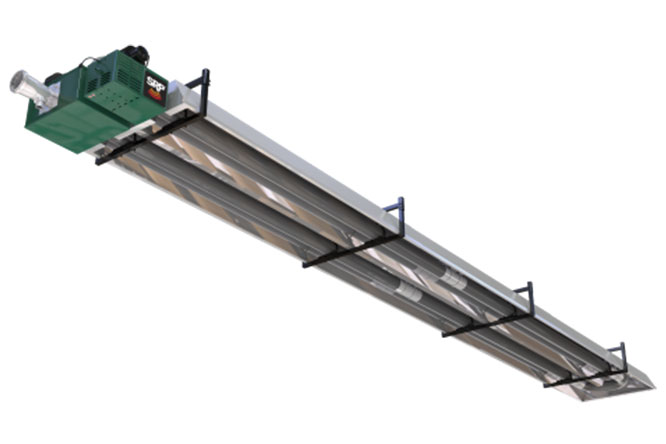
Modulating infrared tube heaters available in 80, 115, 150, and 200 MBTUs ratings. Fully automatic or manual control of burner modulation these units are self-regulating, with no fixed points so they can adapt to the demand regardless of conditions.
Single-Stage Infrared
These single-stage, low-intensity gas fired infrared heaters are designed for low ceiling applications with an industry leading top clearance of only 2 inches! Common applications include animal confinement, hallways, and service counters.
High-Intensity Gas Tube Infrared
The Series S high-intensity heaters offer a wide range of direct, cost-effective heat for cold spots with burners rates from 30,000 to 160,000 BTUs. The reliable, direct spark, or millivolt ignition combined with rigid, heavy duty construction is top of the industry.
Luxury Gas Tube Infrared
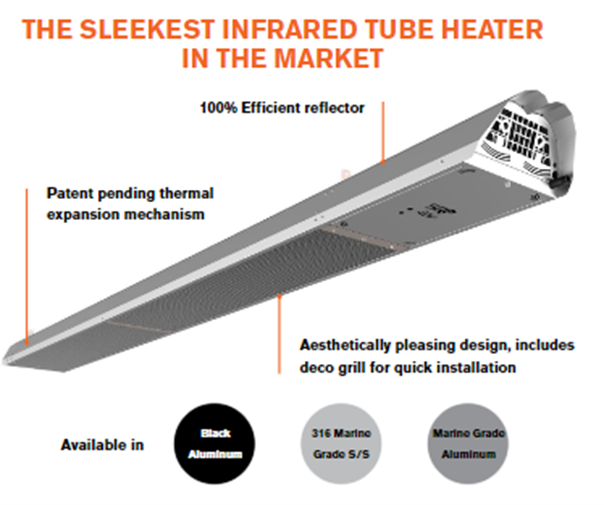
This is a sleek, modern, fully enclosed heating solution to properly and safely heat the outdoors. There are two stage tube heaters, wind resistant up to 12 mph, from 40,000 to 100,000 BTU/hr. and are effective for ceiling heights from 9’ to 16" only requiring a 4" clearance.
Applications for Gas Tube Infrared Heaters:
- Aircraft Hangers
- Conference Centers
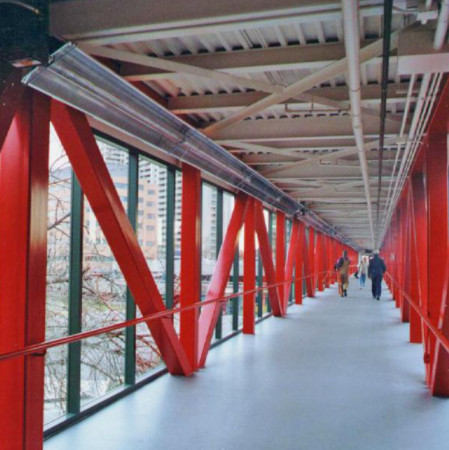
- Enclosed Walkways
- Retail Stores
- Vehicle Service Centers
- Restaurants/Bars
- Hotels
- Sports Facilities
- Agricultural
- Workshops
- And many others…
Need Controls For Your Infrared Heater?
We offer a wide range of controls that offer the flexibility and functionality to best meet the needs of any residential or commercial property application. The convenience to adjust heating intensity, optional timer functions, and maximize energy efficiency as well as creating multiple heating zones with one or more heaters on each zone.
For larger jobs, we will custom build relay panels in our UL 508 panel shop to meet your application requirements, and every panel is tested to align with our quality standards before leaving our factory.
Learn more about our infrared heater controls.
Frequently Asked Questions
Quick Links
How do gas tube infrared heaters work?
Gas tube infrared heaters generate heat by combusting natural gas or propane within a radiant tube. As the tube heats, infrared energy is emitted toward occupants, equipment, floors, and other surfaces below. Reflectors positioned above the tube direct additional radiant energy into the occupied space for maximum efficiency. Unlike forced-air systems that must heat large amounts of air, infrared systems provide warmth directly to objects and people, resulting in faster comfort and reduced heat loss.
Why are gas tube infrared heaters often preferred for large commercial and industrial buildings?
Gas-fired infrared systems are particularly effective in facilities with high ceilings, large open floor plans, or frequent air exchange. Warehouses, manufacturing plants, aircraft hangars, vehicle service centers, and agricultural buildings can lose significant amounts of heated air through doors, ventilation systems, or infiltration. Since infrared heaters warm surfaces and occupants directly, comfort can be maintained without continuously reheating large volumes of air. This often improves energy efficiency while delivering more consistent comfort throughout the space.
What is the difference between single-stage, two-stage, and modulating infrared heaters?
Single-stage infrared heaters operate at a fixed heat output and are often chosen for straightforward heating requirements and lower mounting heights. Two-stage models can operate at multiple output levels, allowing them to reduce energy consumption during periods of lower heating demand while maintaining comfort. Modulating heaters offer the greatest level of control by continuously adjusting heat output based on conditions within the space. These systems can improve temperature stability, occupant comfort, and overall operating efficiency in larger or more complex facilities.
Are gas tube infrared heaters suitable for outdoor applications?
Yes. Specialized outdoor-rated and architectural gas tube infrared heaters are designed specifically for patios, restaurant seating areas, hotels, entertainment venues, and other outdoor gathering spaces. These systems provide targeted radiant warmth that remains effective even when air movement would reduce the effectiveness of traditional heating methods. Many outdoor models feature enclosed designs, minimal clearance requirements, and wind-resistant construction. This makes them a popular choice for extending the use of outdoor spaces during cooler weather.
Can gas tube infrared heaters be integrated with advanced controls and zoning systems?
Absolutely. Modern infrared heating systems can be paired with thermostats, timers, occupancy controls, building automation systems, and multi-zone control strategies. Zoning allows operators to heat only occupied areas rather than entire facilities, helping improve efficiency and reduce operating costs. For large commercial and industrial installations, custom relay panels and control packages can be engineered to manage multiple heater groups from a centralized system. This level of control helps optimize comfort while supporting energy-management goals.